
Dining room sizing & material guide
Will Dining Chairs Stay on the Rug When Pulled Out? Exact Perimeter Allowances and Flatweave vs Low-Pile Rules
Dining chairs stay smoothly on an area rug when the rug extends 65 cm to 75 cm (26–30 inches) beyond every seated edge of the dining table — measured with any frequently used extension leaves open — and when the surface uses a tight flatweave (such as solution-dyed Olefin) or a dense 8–10 mm low-pile 100% wool cut pile paired with a thin 2–4 mm firm felt-rubber pad rather than high shag or moisture-sensitive viscose.
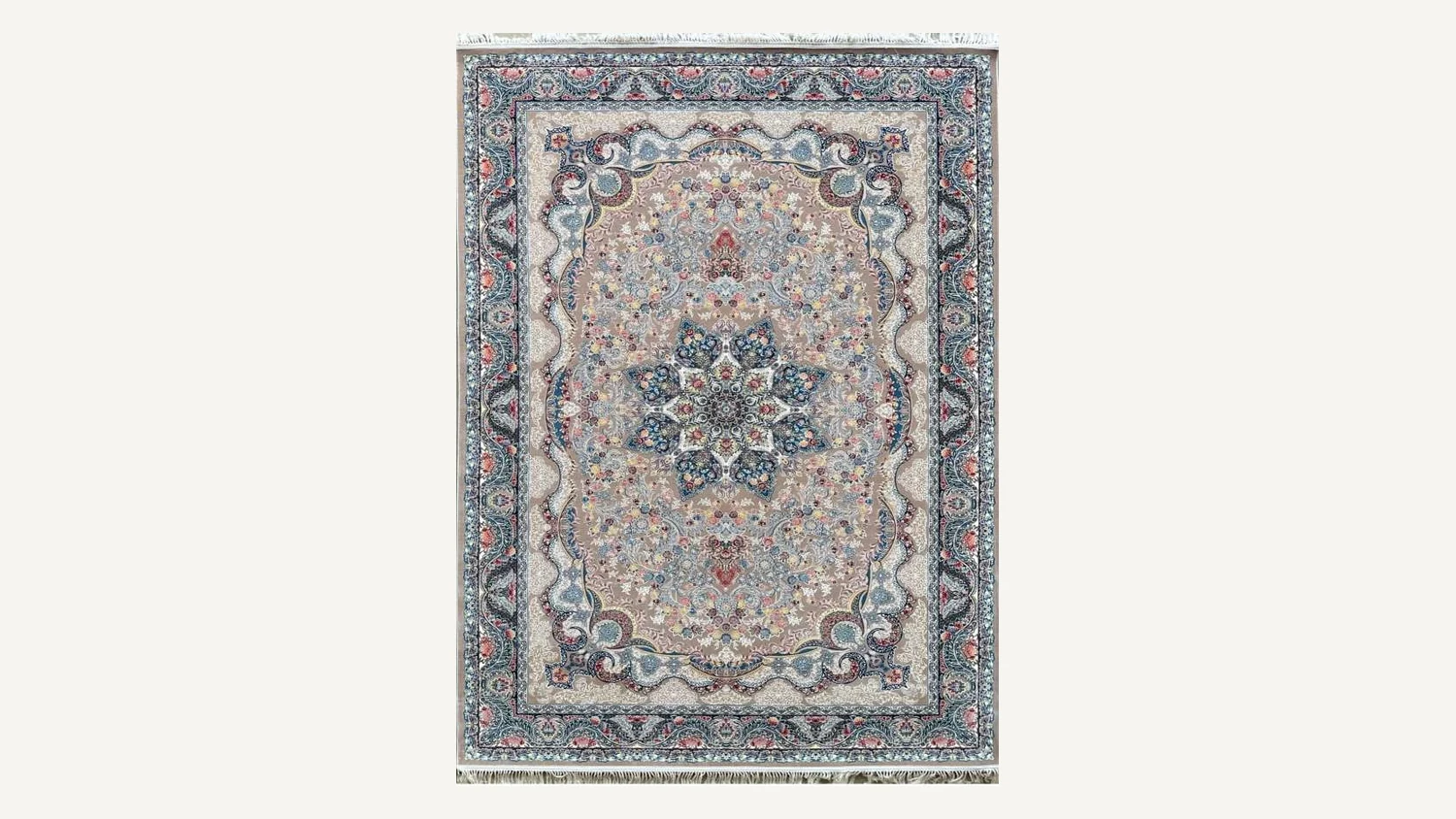
The 65–75 cm Pull-Out Rule That Separates Comfortable Dining From Daily Frustration
Nothing exposes an undersized area rug faster than a dinner party. A 200 × 300 cm rug looks generous beneath an empty 220 × 100 cm dining table in a showroom photograph — because the chairs are tucked tight under the apron. The moment eight guests pull their chairs back 55 cm to sit down, every rear chair leg drops off the cliff of the rug.
To keep all four chair legs stably on one plane while sitting, rising and conversationally leaning back, add 65 cm to 75 cm (26–30 inches) beyond all active edges of the tabletop. Check your table dimensions against the reference schedule below before ordering.
| Dining table shape & size | Seating capacity | Minimum rug size (+65–75 cm pull-out per side) | Common undersizing mistake to avoid |
|---|---|---|---|
| Round table: Ø 110–120 cm | 4 chairs | Ø 250–270 cm round (or 250 × 250 cm square) | Ordering a Ø 180–200 cm rug: back chair legs drop off the rim every time diners sit down. |
| Round table: Ø 150–160 cm | 6–8 chairs | Ø 290–310 cm round | Forgetting curved armchair depth (+10 cm deeper than armless side chairs). |
| Rectangular: 180 × 90 cm | 6 chairs | 250 × 320 cm or 250 × 350 cm | Forgetting head-of-table chairs and buying a narrow 170 × 240 cm living-room rug. |
| Rectangular: 220–240 × 100 cm | 8 chairs | 250 × 380 cm or 300 × 400 cm | Measuring with extension leaf closed — measure at maximum extended holiday length. |
| Long banquet: 280–300 × 110 cm | 10–12 chairs | 300 × 430–450 cm (or 400 × 500 cm Kashan scale) | Allowing rug edge to collide with sideboard cabinet doors (leave 15 cm swing gap). |
Choosing a Surface That Lets Chairs Slide and Forgives Espresso or Wine
Correct dimensions solve half the dining problem; pile mechanics and yarn stain chemistry solve the rest. Cross-check your preferred look against the dining construction table below and residential stain-care principles from The Carpet and Rug Institute.
| Rug construction | Chair-glide ease | Crumb & red-wine cleanability | Dining suitability verdict |
|---|---|---|---|
| Solution-Dyed Olefin / Teslin Flatweave | Effortless smooth glide | Highest: non-absorbent yarns wipe and rinse clean. | Top choice for everyday family breakfast/dining rooms. |
| Dense Low-Pile 100% Wool Cut Pile (8–10 mm) | Smooth with wide felt/PTFE chair glides | Good natural droplet resistance + spot-blotting; choose multi-tone pattern (e.g. Kashan). | Top choice for formal acoustic dining rooms. |
| Natural Jute / Sisal Flatweave | Easy slide on tight sisal; bumpy on chunky jute | Crumbs vacuum out, but red wine, soy sauce & oil stain permanently. | Dry adult formal rooms only — risky with kids or saucy meals. |
| High-Pile Shag (>15 mm) or Viscose / Silk | Chairs snag, tilt and plough deep ruts | Catastrophic: liquids watermark viscose instantly; crumbs hide deep. | Strictly exclude from all dining rooms. |
Step-by-Step 10-Minute Floor Tape Test Before Ordering a Dining Rug
- Open any dining-table extension leaves first: Measure maximum holiday hosting length rather than everyday compact mode if guests use the extended table several times a year.
- Mark the proposed rug rectangle or circle with painter's masking tape: Check that sideboards, bar cabinets and kitchen-island walkways still enjoy at least 45–60 cm of clear floor or door-swing room outside the tape line.
- Sit down and stand up in every chair position: Have a family member sit comfortably, push back to stand up and step out sideways — verifying all four chair glides remain at least 8–10 cm inside the taped edge.
- Inspect chair-foot bottoms before unrolling the rug: Fit smooth domed PTFE or heavy-duty felt glides (28–35 mm diameter) onto wooden or metal chair legs so daily movement never catches flatweave ribs or shears wool tufts.
Coordinating Sideboard Doors, Open-Plan Living-Dining Gaps & Pad Firmness
In open-plan apartments where the dining table sits two metres from the living-room sofa, adding +70 cm around the dining table can push the dining rug close to adjacent furniture zones. Maintain at least 15–20 cm of clear floor before hinged sideboard or bar-cabinet doors so cabinet leaves swing freely without scraping the border, and preserve a clean 40–60 cm bare timber or stone strip between your living-room rug and dining-room rug so the two zones read intentionally framed rather than colliding edge-to-edge. Underneath a dining rug, choose a thin, high-density 2.5–3.5 mm natural rubber + felt pad rather than a thick bouncy sponge cushion so narrow chair legs slide smoothly without indenting deep ruts.
Fibre Resilience Under Sliding Dining-Chair Legs
Where formal dining rooms call for acoustic warmth rather than synthetic flatweave, dense low-pile wool draws on natural helical crimp recovery documented by The Woolmark Company paired with wide felt chair glides and CRI spot-blotting care.
Frequently asked buyer & specification questions
How many centimetres should a dining rug extend past the table edge?
Allow 65 cm to 75 cm (26 to 30 inches) on every side where a chair sits — and up to 80 cm if chairs have deep curved armrests or if a circulation walkway passes directly behind seated diners.
What happens when dining-chair back legs cross the edge of the rug repeatedly?
Every time a diner pushes back, the rear chair legs drop off the rug edge; when they pull forward, the legs catch the perimeter binding, curling the edge upward, fraying serging yarn and rocking the chair unevenly.
Should I size the rug for an extendable dining table open or closed?
If you open the extension leaf more than two or three times a year, size the rug for the extended length so end-chair guests do not teeter half-off the edge during dinner parties.
What chair-leg glides protect a wool or woven dining rug?
Replace tiny hard plastic nail-in feet (<15 mm diameter) with smooth 28–35 mm domed PTFE (Teflon) or heavy-duty felt glides that spread weight and slide across tufts without ploughing.
Share your scaled floor plan, zone list or furniture dimensions, target material direction and delivery country with the ADA studio.
Request physical strike-off samples or a project quotation ↗