
Choose a movable rug when the furniture plan or the room itself will change
When the furniture may be rearranged, or the room is rented or reconfigured, a movable rug is usually the better choice than a wall-to-wall floor, because the piece can be lifted, rotated or moved with the layout. That decision starts from how the room will change, not from a generic price comparison.
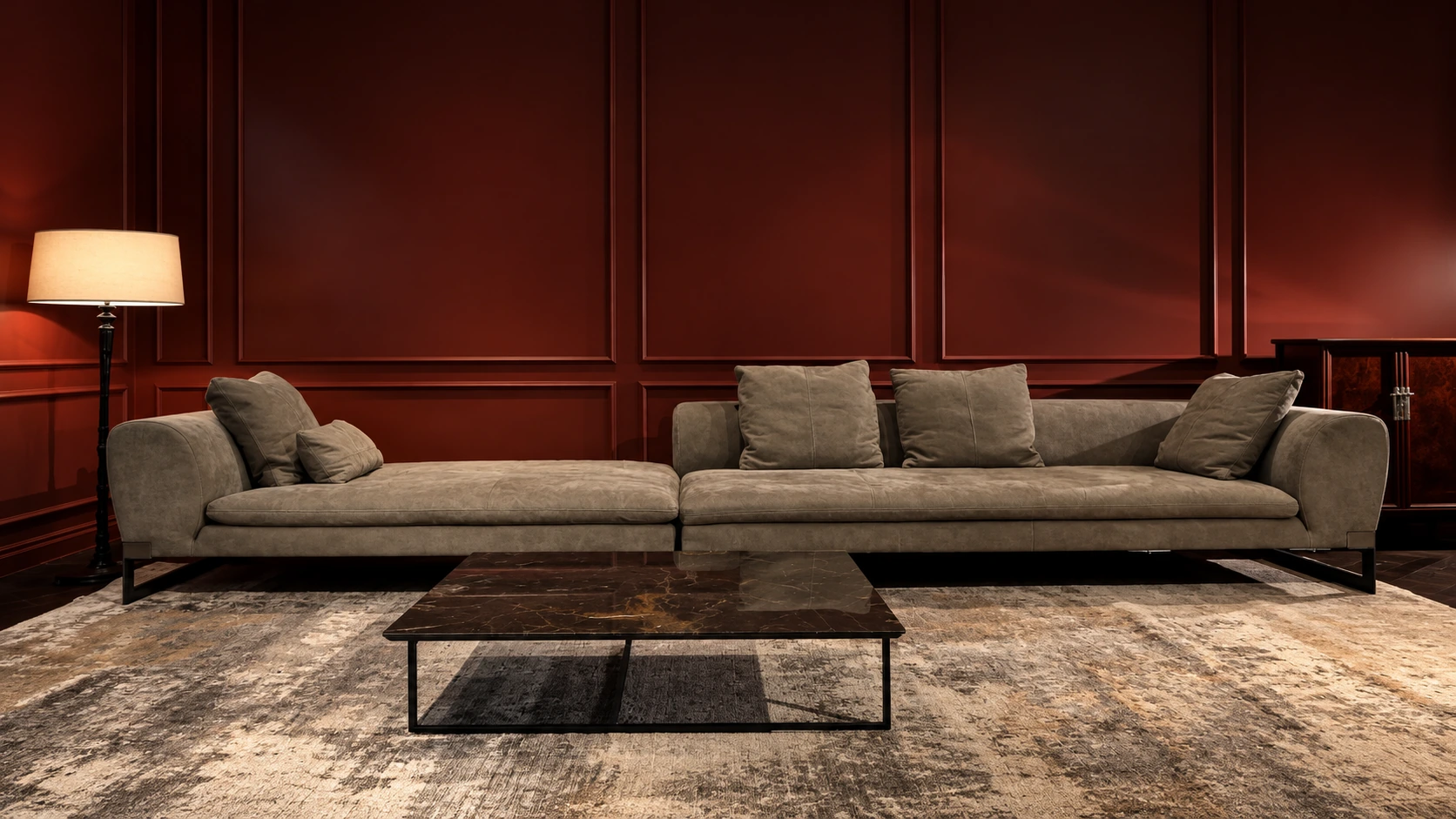
A contrast table for a room that will change
When the furniture may be rearranged, or the room is rented or reconfigured, a movable rug is usually the better choice than a wall-to-wall floor, because the piece can be lifted, rotated or moved with the layout. That decision starts from how the room will change, not from a generic price comparison.
Use this table with the furniture-group size and placement note and the pad, door swing and circulation checks. It does not give a universal inch or centimetre size, and it does not set a price or a lead time.
| Situation | Why a movable rug may be the better choice | What to measure or record | When a wall-to-wall or mill brief is the better next step |
|---|---|---|---|
| A furniture plan that is expected to change | A movable rug can gather a sofa and tables without covering the whole floor, and the outline can still make sense if a chair moves to the window or a table extends. The piece can later be lifted, rotated or moved to another room. | Start from the furniture group, not from the floor area. Mark the current arrangement and the likely alternatives. Decide whether only the front legs, or the whole group, should sit on the rug, then test a paper outline. No single width or length is the right answer for every living room. | If the floor must be fixed in place across the whole room, and the furniture plan is not expected to change the outline, a wall-to-wall or installed specification may be the better brief — and that brief belongs on adacarpet.com, not on this page. |
| A rented or reconfigurable room | A movable rug can be taken up, stored or moved when the tenancy or the layout changes, without committing the whole floor to a fixed installation. | Note the door swings, the routes people use, and any later move you already know about. When a familiar rug goes to another setting, review its condition, the new floor, and the appropriate underlay or backing. | A hotel corridor, a workplace plate, or another specification that will be sent to a mill as a fixed, wall-to-wall or installed floor should use the hotel and workplace specification brief on adacarpet.com. For a zone-by-zone construction table, use the zone construction decision on the same site. |
| A furniture group that should remain a distinct island | A movable rug is usually the better choice when the piece should gather a group without covering the whole floor, leaving circulation and adjacent finishes visible. | Measure the furniture group and the space around it, including the space needed to pull a dining chair out or to walk around a table. Test the outline from the main entrance, and include the height of a pad or underlay before confirming a size. | If the brief is to cover the whole floor as a continuous installed surface, do not force that requirement into a movable-rug size. Use the mill-ready brief on adacarpet.com instead. |
| A handmade or hand-finished commission | The choice between a movable rug and wall-to-wall is still a layout decision. A handmade or hand-finished commission is a different brief: fibre, surface, shape and edge, agreed design by design. | If the piece you want is a handmade or hand-finished commission, take the layout measurements from this site and write the commission on adahandmade.com. | Do not treat this contrast table as a handmade-identification tutorial, and do not treat it as a hospitality corridor specification. |
Start from the furniture plan, then check the pad and the doors
Once you have chosen a movable rug because the layout will change, the size still follows the furniture group. The furniture-group size and placement note explains how to mark the sofa and tables and how to decide whether only the front legs, or the whole group, should sit on the rug. The pad, door and circulation page is the last set of checks: thickness, doors and walking clearance, made with the intended pad in the measurement.
This site does not publish a standard pad thickness, and it does not treat any inch or centimetre figure as a universal rule. Confirm the appropriate underlay with the studio / at quotation. Final dimensions, backing, edge, pad and care are confirmed in the quotation. Delivery timing is not promised on this page.
Indoor and outdoor rugs, and the light in the room
Indoor and outdoor rugs are not interchangeable. Outdoor woven rugs are a separate case; the outdoor catalogue does not establish universal weatherproofing. A covered terrace, an open balcony and a living room are three different exposures. Describe sun, shelter and cleaning arrangements, then confirm the selected weave, backing and intended setting before ordering.
Colour should be read from a physical sample in daylight and in evening light. A photograph or a screen colour is a useful direction, but lighting, scale and pile change the finished surface.
What to send, and where to review it
Send a room plan, the dimensions of the main furniture, and two or three photographs that show the floor and the light. Mark door swings and the routes people use. If the furniture may change, describe the likely alternatives as well as the current layout. Note the preferred colour direction and the floor material.
Write to adafloor@163.com or call +86 158 1876 6066. ADARUG is the ADA destination for movable area rugs. The Shenzhen showroom is at Room 2005, Phase II, Yizhan Centre, Zhanyi Road, Luohu; the Shanghai showroom is at 3F Wutongli, 3 Kangping Road, Xuhui. The hand-tufting workshop is in Xiqiao, Nanhai, Foshan. Visits are by appointment; please contact the studio before travelling.
Bring the plan, the likely furniture changes and the photographs to the conversation.
Discuss a rug with ADA ↗